UDH_HC Mentorship & Enrichment Program

ORIGINES

L’UDH Health Coach est une organisation à but non lucratif engagée à contribuer dans l’avenir d’Haïti dans le domaine de la santé en investissant dans l’éducation et le développement des futurs leaders de ce secteur, en hommage à la mémoire de la regrettée Lyna Jean-Baptiste, enseignante.  Convaincus que les étudiants en sciences de la santé sont les piliers du système de santé de demain, nous œuvrons à renforcer les compétences locales en offrant un soutien éducatif de qualité et en favorisant des initiatives de développement communautaire dans le domaine sanitaire.

PROGRAMME:

L’UDH Health Coach (UDH_HC) aux USA avec la coopération de la Fondation Lyna Jean Baptiste (FLYJEB) en Haïti,  propose un programme de mentorat destiné aux étudiants haïtiens en sciences de la santé (Médecine, Sciences infirmières, psychologie, Odontologie, pharmacologie). Ce programme offre une formation de qualité conforme aux normes internationales à travers des présentations bilingues en ligne. Grâce à une approche multidisciplinaire, inspirée des modèles de l’hôpital Cambridge Health Alliance et de l’Université Harvard, les participants bénéficient d’un accompagnement technique et professionnel adapté à leurs besoins.

Conditions de participation: Pour intégrer le programme, l’étudiant (e) doit 1-Être officiellement inscrit à la Fondation Lyna Jean Baptiste en tant que membre actif. 2-S’engager à suivre régulièrement les cours en ligne et les sessions de mentorat proposés. 3-Respecter les règles et conditions définies par l’UDH_HC pour le bon déroulement du programme. 4-Accepter de payer les frais d’adhésion ou de participation, si requis,  conformément aux directives de la Fondation.

LES MEMBRES: Étudiants haïtiens (2e, 3e, 4e. 5e, 6e, 7e année) inscrits dans une filière des sciences de la santé, tels que médecine, sciences infirmières, psychologie, odontologie, pharmacologie ou poursuivant des études avancées, résidant ou étudiant à l’étranger. -Bénéficient d’un accès prioritaire aux présentations en ligne, au site de l’organisation, au mentorat individuel et aux sessions de développement professionnel, au club d’anglais.                                  -Ont accès à la bibliothèque électronique -Participent aux activités aux projets en cours de l’UDH_HC et de la FLYJEB. -Bénéficient de ressources adaptées aux standards internationaux, à des opportunités de recherche collaborative. -Reçoivent un soutien ciblé pour développer des compétences pratiques, participent aux émissions radios UDHKwenSante et accéder à des stages d’observations.

LES LEADERS: Membres ayant obtenu la note requise par l’UDH_HC/FLYJEB à la fin de la session, et ayant démontré des qualités de leadership et manifesté un engagement envers les objectifs de l’UDH_HC et de la FLYJEB pourront être sélectionnés comme leaders. -Ces membres sont encouragés à jouer un rôle actif dans le programme, notamment en servant de mentors pour leurs pairs. -Bénéficient d’un accès complet au projet en cours d’UDH_HC.

Welcome to immigrants to the US medical/culture 

How to adapt to your new life as a migrant in the U.S.

Presented By Christian Massillon, psychologist and lawyer.

He spent three months at the Cambridge Health Alliance hospital doing an observership, where he learned a lot. Now, in Haiti, he’ll share his perspectives on adapting as a migrant.

“Adapting to a new culture can be a challenge for anyone, especially for migrants to the United States. New customs, a new language, and a new way of life can be bewildering and stressful. It can take time to adjust to the culture shock we face when we find ourselves on the doorstep of a new country,” He explains. 

In this article, the psychologist, accompanied by Dr. Jean-Baptiste, will discuss adaptation and what’s at stake and share some tips on adapting to your new life as a migrant in the USA.

Understanding culture shock and the obstacles that can affect the character of migrants

Culture shock is a psychological reaction when you are confronted with a new way of life upon relocation. It can manifest itself into feelings of confusion, distress, loneliness, and anxiety, and it happens when you’re being faced with adjusting to things being done differently from what you’re used to. These feelings can make a person more prone to violence. It’s important to understand that culture shock is a normal reaction. It takes time to adapt to a new culture, and it’s normal to feel complex emotions during this period.

Let’s take the case of a person from South America emigrating to North America, more specifically, the United States. This person is likely to encounter many obstacles along the way, which may affect their actions, thinking, and character. This can lead to frustration as things turn out differently than expected. There may be reactions such as avoidance, and this person may sometimes become violent, not knowing how to channel their emotions. A whole range of emotions can take place when faced with living in a brand-new environment. But with time and effort, you can overcome culture shock and create a new life.

Violence

This is an important subject to focus on. Violence is a serious problem in many communities. It can take many forms, including domestic violence, verbal abuse, sexual violence, and child abuse.

Dr. Jean-Baptiste mentions violence by men against women and also argues that violence is not acceptable in any form but that in some cultures, violence is accepted or even encouraged on some level. This is the case in some areas of Haiti, where it is considered normal for men to beat their wives or for adults to abuse children.

Causes of violence in the Haitian community

Dr Massillon shares his opinion on this subject.

Haitians are particularly vulnerable to this type of violence, because of their history of trauma and the culture of violence that exists in this country from colonial times to recent conflicts. Violence is somehow imprinted on us. Whenever we are unable to control our emotions, we become violent as parents who beat their children, or husbands who beat their wives. This history of trauma has left its mark on Haitian culture, and violence is often seen as a normal way of resolving conflicts. When we talk about violence, we’re not just talking about physical violence, but also verbal violence.

So we need to heal from all these forms of trauma and violence. Because it’s a form of trauma that we learn and that doesn’t do us any good, because violence only harms other people as well as ourselves. So it’s very important to recognize that we carry this kind of trauma with us and that we need to heal from it in order to progress. In order to grow, we need to unlearn this form of reaction.

Dr Jean Baptiste said it was good that Dr Massillon underlined the fact that we transmit this kind of trauma, the reaction to violence, from generation to generation. When a child misbehaves, often the parent’s reaction to this is in the form of physical punishment, like getting beaten with a  belt. Then, when this child goes to school and fights, the teachers will question him regarding his behavior, and the child may report what is happening in his family environment. In such situations, parents may lose custody of their children.

Sometimes, we are not in conflict with someone, but the way we react to someone may be perceived as a threat in some cultures, like in the U.S. Therefore, we must learn to recognize and deal with this type of reaction, which has become like a normal reaction for us, it’s like permissive violence.

Then there’s sexual violence or sexual abuse. The consequences for victims can be devastating in these cases. It is, therefore, necessary for parents and elders in the community to keep an eye on their children because there are a lot of predators out there. It’s something prevalent in our culture that we perhaps don’t talk about enough. We must watch our children, even when they go to the bathroom. It’s up to us to protect them. When children are victimized, it can lead to physical injury, psychological trauma, and mental health problems. Predators are severely punished when convicted. The abuser may spend years in prison, may never be granted residency, or may even be deported to their country of origin.

It’s also good for men and women to learn what’s appropriate when touching their children. It’s important to make people aware of potential problems and encourage them to report any suspicion of child sexual abuse.

If a child has marks on their body, it’s essential to ask what happened. It’s also important to believe the child and take their allegations seriously. If you suspect that a child is sexually abused, report it to the authorities.

It is also essential for clinicians to be alert to signs of child abuse. This may include physical injuries, changes in behavior, or statements made by the child. Children who are abused at home indeed tend to stay away from other children. This may be due to many factors, including shame, isolation, or fear. Abused children may also have difficulty concentrating or learning, which can affect their performance at school. That’s why teachers and other educational professionals need to be alert to the signs of child abuse.

In conclusion, Haitian migrants arriving in the U.S. need to be aware of the challenges they are likely to face, including culture shock, violence, and legal differences that can make the transition difficult. It’s important to prepare for these challenges and understand that culture shock is a normal reaction to moving to a new place. It can lead to feelings of confusion, distress, and isolation. It’s also important to remember that culture shock is temporary and usually fades with time.

Adapting to a new culture takes time. Refrain from understanding everything or feeling comfortable immediately. Learn the laws of the United States, especially those concerning domestic violence, sexual violence, and child abuse. Be open to the new culture. Be patient. Try to understand the cultural differences between Haiti and the United States. Be careful when interacting with others.

By following these tips and taking these precautions, you can protect yourself from trouble and increase your chances of successfully adapting to life in the United States.
Une page dans l’histoire de la vie de l’institutrice Lyna JEAN BAPTISTE.

   Par son neveu Colbert Bien aimé Fils.

Lyna Jean Baptiste travailla comme institutrice d’abord à l’école congréganistes des sœurs du Sacré cœur de Turgeau à Port-au-Prince, ensuite à l’école public Simone Ovide Duvalier, et à l’école des sœurs à Cabaret. Elle enseigna avec beaucoup de patience, cette grande patience lui avait permis d’éduquer et de former des milliers d’élèves tant à Port-au-Prince qu’à Cabaret. L’institutrice Lyna joua un rôle très important dans l’avancement de la communauté de Cabaret.

En Collaboration avec sa sœur Mme.Colebert Bien-aimé, elle créa une organisation qui s’appelait CREPROF (Centre de recherche pour la promotion féminine).Cette organisation permettait à plusieurs jeunes filles de Cabaret d’apprendre une profession comme la couture, la cuisine.

Ensuite Lyna et Mme.Colebert créèrent un moulin coopératif. C’était un moulin de Maïs et de Riz, qui aidait les paysans de Cabaret, à décortiquer  le riz, et à transformer le maïs en maïs moulu, le maïs qu’ils produisaient dans leurs jardins.

Lyna continuait à travailler comme institutrice à l’école des sœurs de Cabaret, jusqu’à sa retraite dans les années 1980. Après sa retraite elle immigra à Boston, où elle mourut le 14 Juillet 2013 à l’âge de 97 ans

COVID-19 coronavirus

Over the past several weeks COVID-19, the disease caused by a new strain of coronavirus, has caused widespread disruption throughout the world.  More than 750 cases have been detected in the U.S. As the virus continues to spread , we have been faced with the difficult decision whether to defer our Annual Auction Gala event as we seek to address our members’ and donors’ health concerns.
UDH Health Coach Inc. has decided to postpone UDH’s Annual Gala, which was slated to take place on:  Saturday, March 28th, 2020 at The Arts of Armory Center 191 Highland Ave Somerville, MA 02143.   As you know, your support is crucial to our organization, enabling us to continue supporting Haitian medical and nursing students and broadcasting our weekly Radio Show “Kwen Santé”.
If you’ve already purchased your ticket to our Gala, please be aware that it is still valid and will be honored at the rescheduled event, the date of which will be announced in the near future.
 –  In the meantime UDHHC encourages each and everyone of you to stay focused and avoid exposure to the virus and is sharing some standard precautions to help prevent the spread of Coronavirus, as follows:

–          Washing your hands often with soap and water for at least 20 seconds.

–          Using alcohol-based hand rubs and gels.

–          Avoiding touching your eyes, nose, and mouth with unwashed hands.

–          Avoiding close contact with people who are sick

–          Staying home when you are sick.

–          Covering your cough or sneeze.

–          Cleaning and disinfecting frequently touched objects and surfaces

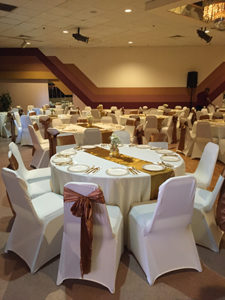
UDHHC Galleria 2020

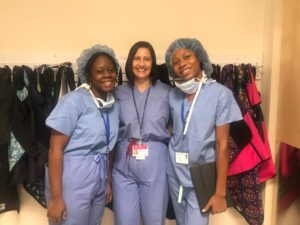
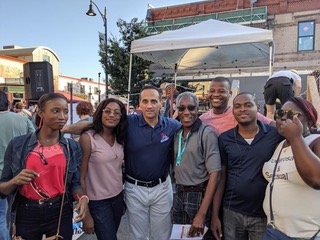
UNDH Medical & Nursing Students & Mayor Joe / Union Square, Somerville MA.

SaveDateUDH2019Fundraiser

UDH Services, Inc. is pleased to announce that it will be hosting its 6th Annual Fundraiser!!!!!

Save The Date!!!!

April 6th, 2019 from 7:00 pm to 11:00 pm

Universities of Haiti (UDH) invites you to our sixth annual fundraiser to benefit our radio broadcast “Health Education” on WNTN 1550 AM every Saturday 9:00 AM to 10:00 AM. This event will also help provide for the “Sponsor a Student Program” that allows us to support the medical and nursing students who’ll be spending a month here and taking part in an observational externship at the Cambridge Health Alliance.

These funds will also support a Student attending a University facing certain financial hardships

This exciting event will be held:

 Date:                    April 6th, 2019 from 7:00 pm to 11:00 pm

Location:             “Somerville City Club”

                              20 Inner Belt Road, Somerville, MA. 02143

We will be presenting: Live Music Jazz, Music DJ, and more

There will be an award ceremony honoring a few exceptional health providers and community leaders

It’ll be a fabulous  time with great food and friends to help out a very worthy cause.

Participation: $ 50.00

In 2018 UDH Services spent about $ 10,000.00 for the radio Health Education, $ 6,000.00 for food and living accommodation for medical, and nursing students, and $ 2,000.00 on the “Sponsor a Student” program

For 2019, UDH has a target of $ 25,860.00 dollars in order to continue these programs

Your sponsorship will be greatly appreciated. Please do not hesitate to contact us with any questions or concerns at 617-460-5859 or visit our website and make a secure contribution at https://udhhci.org


Sincerely,

Dr. Marie Louise Jean-Baptiste, President           

Alix Simeon, Executive Director

UPCOMING HAITIAN CREOLE COURSES

UPCOMING HAITIAN CREOLE COURSES For Grade Level: 7 Thru Grade Level: 12
Objective:
To provide anyone interested in Haitian language and culture the opportunity to learn Haitian Creole through listening, reading, writing and speaking.
To develop sensitivity to Haitian culture, customs and history through Haitian Creole literature.
Schedule:
Course will begin on Saturday September 29, 2018 and will end on Saturday December 15th, 2018.

Classes will be every Saturday from 12:00pm to 2:00pm.
Make up classes will be provided by the instructor as needed.

Location: Arts in the Armory, 191 Highland Ave Somerville, MA.02143

Registration: September 1st to September 22nd , 2018
Contact: UDH Services
Email: udhservices@gmail.com
Phone: (617) 460-5859.

Instructor: Yvon Lamour, B.S., M.Ed., M.S.W.

Haitian Language and Culture Course – Kou Lang ak Kilti Ayisyen SDKA-Sant Devlòpman Kreyòl Ayisyen1983 HCDC-Haitian Creole Development Center1983 Cambridge, MA 02140
Yvon Lamour has taught for more than 30+ years in the Cambridge Public Schools, with comprehensive experience as an administrator, a guidance counselor, and a classroom teacher. Respected and well-regarded for his cultural expertise, literary insights, and teaching abilities, he has won numerous awards. Lamour authored the book Divès Moso Nan Metye Fè Lekòl and designed countless instructional materials that focus on teaching and learning in Haitian Creole. He currently runs the SDKA-Sant Devlòpman Kreyòl Ayisyen1983 / the HCDC- Haitian Creole Development Center1983, which offers translation, literacy, consultancy, training, and Haitian Creole classes, in addition to the eighteen-year-old summer Teaching Seminars throughout Haiti. Lamour holds degrees and certificates from Boston University, University of Massachusetts/Boston, as well as Indiana University/Bloomington.
Course Description:
This course teaches speaking, reading, and writing through the study of Haitian Creole literature. By studying Haitian Creole literature students deepen their comprehension of the structure and mechanics of the language. The course also provides an in-depth study of Haitian culture, customs and history. Listening, speaking, reading and writing are all taught simultaneously and students will be able to function in a wide variety of real life situations in public places, at work and at home. Comprehension of simple sentences including statements, questions and commands will be developed. The oral activities will include oral reports, presentations, dialogues and role-playing, while the reading component will focus on the works of Haitian Creole authors.
Course Requirements:
Interest in Haitian language and culture