Contact Us

UDH_HC KWEN SANTE!!! DID YOU KNOW!!!

Immigrant’s Guide to the U.S. Healthcare System

Immigrants new to the U.S. face a ton of issues. Some of us are lucky enough to
receive help with those issues. For my part, I’m hoping to help you with the medical side
specifically. Today, I want to talk about the American healthcare system, which includes
nurses, psychologists etc. The main difference between Haiti and the U.S. is the U.S.
healthcare system and how it’s organized based on need. It can be confusing at first, so I want
to guide you through that today.
The healthcare system in the U.S. is split up into categories, the first category being the
emergency rooms. Some people think that going to the emergency room will get them access
to care quicker, but that is not the case. Emergency rooms are specifically for people who
have life-threatening injuries or are dealing with severe trauma. These people need to be
cared for immediately, or they may die.
Second, we have Urgent Care rooms designed for people with urgent health care issues who
cannot access their primary care physicians for whatever reason. It’s important to remember
that the physicians or providers in an Urgent Care Room are not necessarily equipped to
address all sorts of illnesses.
Now, the third, we have what we call a Healthcare Centre, a place where several specialists
and providers are present to provide healthcare to patients. In this group, you’ll find doctors
such as internal medicine doctors, nurse practitioners, specialists, and physician assistants.
You’ll also find dentists in a center such as Cambridge Health Alliance, as oral health is very
important.
When you first call, the front desk receptionist will answer your call and schedule an
appointment for you, but if your healthcare issue is too complicated, they’ll transfer you to
the nurse, who will then decide whether or not you need to be sent to the emergency room.
Otherwise, if your issue needs immediate care but doesn’t require a trip to the emergency
room, they’ll see who is available and schedule you an appointment as soon as possible. You
also have the option to call your primary care provider’s clinic even after hours in case of an
urgent healthcare issue.
I want to remind everybody of the importance of being on time at your medical appointments
because, once again, the healthcare system in the United States is very different from Haiti. If
you are late for your appointment in Haiti, the doctor will still see you. But in the United
States, you must reschedule your appointment if you are more than 15 minutes late.
When you arrive at the healthcare center, you will first be greeted by the front desk
receptionist; after being checked in, you will be seen by the physician assistant, who will ask
you several questions. At that point, they may also check your blood sugar and vitals,
depending on your issue. It may sound like a lot, but this is how it works to be efficient.
When you speak to your provider, they’ll ask you what the purpose of your visit is, among
other things, to get a clearer picture of your health and the issue at hand. In Haiti, we don’t

have primary care providers so it’s understandably confusing to some Haitian patients who
are used to a family medicine doctor doing something like a pap smear, but be assured, these
doctors are trained and will refer you to a specialist if your health issue requires them to do
so.
Often on the first visit, providers will do what is called an intake. This involves a lot of
questions, often very personal, that the provider needs to ask to get a full picture of your
health status. It may feel like the provider is being intrusive, but this is for your benefit. Of
course, everything said between you and your provider is confidential. All providers have to
sign a HIPAA, which is a confidentiality agreement ensuring the provider may not share any
of the patient’s information without their consent. Violating this agreement can lead to the
provider being sued and facing legal issues.
And furthermore, the intakes I mentioned before can be quite extensive. They’ll ask about
your family history, what sort of illness runs in your family, whether you smoke, drink, etc.
Depending on the intake, the questions may differ. Understand once again, this is not the
providers trying to be intrusive. This is necessary information to provide the best care
possible.
Now, depending on your issue, your healthcare provider may refer you to a specialist,
and I may also insist you return after that visit with the specialist. It may be necessary for
your primary care provider to discuss the specialist’s diagnosis with you in greater detail or to
explain anything unclear to the patient.
During your visit, your provider may also offer vaccines to you, which are especially
important for people who are going to start a new job or a new school. A couple of examples
are the hepatitis B vaccine, the Covid vaccine, the influenza vaccine, and the Tetanus
vaccine. Another very important vaccine is the HPV vaccine, which is vital for us because in
Haiti, this vaccine isn’t available, and many patients have cervical cancer.
During your visit, a physical exam may include a pelvic exam and pap smear to look for the
HPV virus in female patients. A pap smear is a screening test, and during your visit, you may
need to do a couple of different screening tests depending on your age. These include a TB
test, an HIV test, or a Hepatitis test. These are important to screen for because the earlier
they’re screened for, the better the chances they can be cared for effectively.
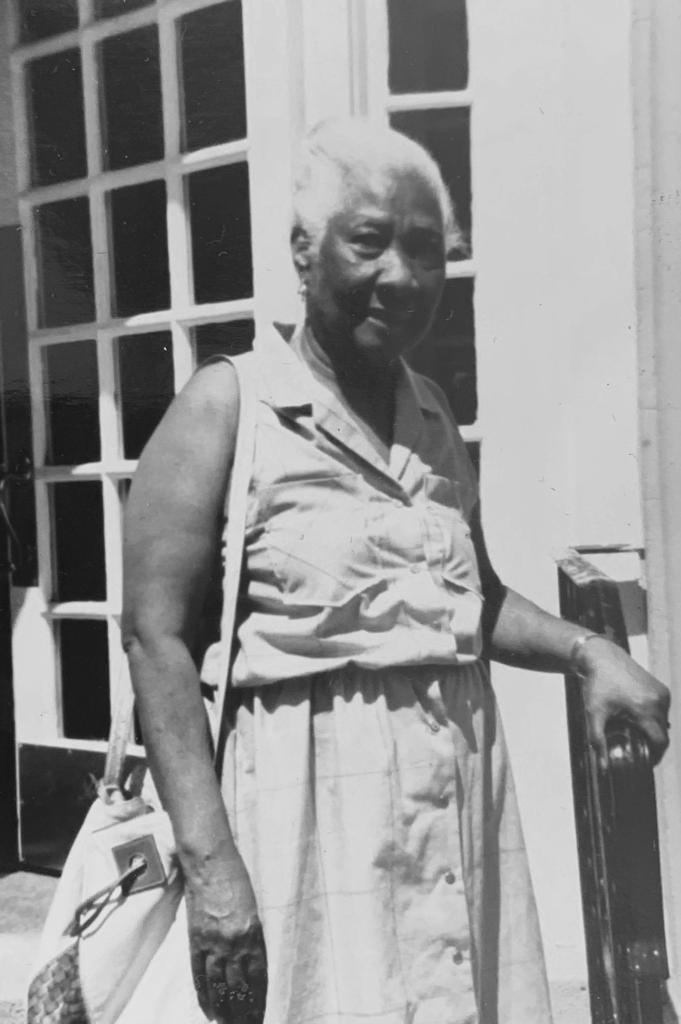
Une page dans l’histoire de la vie de l’institutrice Lyna JEAN BAPTISTE.

   Par son neveu Colbert Bien aimé Fils.

Lyna Jean Baptiste travailla comme institutrice d’abord à l’école congréganistes des sœurs du Sacré cœur de Turgeau à Port-au-Prince, ensuite à l’école public Simone Ovide Duvalier, et à l’école des sœurs à Cabaret. Elle enseigna avec beaucoup de patience, cette grande patience lui avait permis d’éduquer et de former des milliers d’élèves tant à Port-au-Prince qu’à Cabaret. L’institutrice Lyna joua un rôle très important dans l’avancement de la communauté de Cabaret.

En Collaboration avec sa sœur Mme.Colebert Bien-aimé, elle créa une organisation qui s’appelait CREPROF (Centre de recherche pour la promotion féminine).Cette organisation permettait à plusieurs jeunes filles de Cabaret d’apprendre une profession comme la couture, la cuisine.

Ensuite Lyna et Mme.Colebert créèrent un moulin coopératif. C’était un moulin de Maïs et de Riz, qui aidait les paysans de Cabaret, à décortiquer  le riz, et à transformer le maïs en maïs moulu, le maïs qu’ils produisaient dans leurs jardins.

Lyna continuait à travailler comme institutrice à l’école des sœurs de Cabaret, jusqu’à sa retraite dans les années 1980. Après sa retraite elle immigra à Boston, où elle mourut le 14 Juillet 2013 à l’âge de 97 ans

A snippet of the life of Lyna Jean-Baptiste

By her nephew Colbert Bien-Aimé fils

Lyna Jean-Baptiste worked as a teacher, first at the catholic school : “Sacré Coeur de Turgeau” in Port-au-Prince, then at the public school Simone Ovide Duvalier and at the Sisters school of Cabaret. She taught with great patience which helped her educate and shape thousands of children in Port-au-Prince as well as Cabaret.

As a teacher, Lyna played a very important role in the advancement of the community of Cabaret. In collaboration with her sister, Mrs Colbert Bien-Aimé, she created an organization called C.R.E.P.O.F ( Centre de Recherches pour la Promotion Feminine) which translates to : Center of Research for Feminine Advancement. This organization helped many young women learn a trade such as sewing or cooking.

Furthermore, Lyna and Mrs Colbert also created a public mill, which was destined for rice and corn and thus helped farmers husk their rice and transform the corn they produced in their gardens into ground corn.

Lyna continued to work as a teacher at the Sisters school in Cabaret until her retirement in the 80’s. After her retirement she emigrated to Boston in the United states where she died on July 14th, 2013 at 97 years old.

Aldaïne LOUIS, Representative of the 2022 Nurse Les Cayes group

Good evening, I am Aldaïne LOUIS, representative of the Nurse Les Cayes group. It is a pleasure to be with you this evening to express in a few lines, how our journey at UDH health coach has been.

I would like to above all express our gratitude to the managers of the UDH health coach and also take the opportunity to congratulate you, enjoying the excellence of your work and the result obtained and to Thank you for all the time you have devoted to us. It was a very enriching program, filled with knowledge, surrounded by true professionals endowed with an exceptional capacity who meet regularly in order to correlate the activities.

This program has allowed us to consolidate day after day a perfect collaboration with Haitian and American students who in any way promote our professional growth. We have learned a lot of new things, different methods, and principles, which we will adopt during our professional journey, and also this method that we will use will influence others in a way that our health system will have taken another twist.

This program acts on our behavior ,our psychic spirit by helping us to take better care of patients  to invest ourselves more in your practices in a well-structured and well-coordinated way while using the principles  and methods indicated within the UDH health coach .

I cannot end my remarks without reiterating the gratitude towards my very committed and very concerned colleagues and also to thank in a special way each of the students here present for their collaboration and their harmony.

We would like to express our gratitude for the significant help and support you have given us during this period. We sincerely Thank you the managers and with all our heart for your commitment and dedication to us.

Thank you!!!!

2022 Psychology group

Good evening, everyone. I am Christian Massillon, a senior undergraduate psychology student at the University de Notre Dame de Haiti and it is an honor for me tonight in the name of the psychology group. Since April we’ve been attending the UDH Health Coach Mentorship and internship program regularly. Eight months later we are now at the end of the session. It was quite a beautiful journey, the program was the occasion for us to learn about the leading attitudes, about the health practice on an international standard. For us psychology students have the chance to discover new concepts, to review things we already know, and to dig further. Also, this program gave us a taste of the multidisciplinary approach. The mentorship and internship program also helped us to improve our English, specifically its use in the academic context. Moreover, we have the chance to benefit from tools that can help us for the future both in our personal and our professional lives. Here we are talking about self-care and well-being; the smart goal, PDSA, the CV, personal statement and how to make a good PowerPoint presentation, etc. I cannot end this speech without thanking the UDH Health Coach staff, especially thanks to Mr. Alix Simeon, Dr. Marie Jean-Baptist, and Dr. Brutus who understood us, was always there for us and pushed us to do better. We also thank Dr. Frantz Simeon and Dr. Moise who were our group coach at some point. We also want to express our gratitude to CHA for pursuing this initiative. The psychology group also thanks all the students for their collaboration, making this semester a pleasant and fun experience. Last but not least, we want to wish the organization specially “KwenSante”a happy 10th anniversary and we hope that God blesses UDHHHC with longevity so they can continue their service in the Haitian community. Thank you.